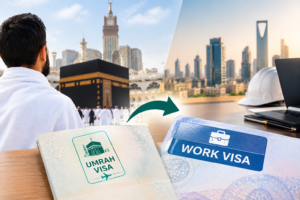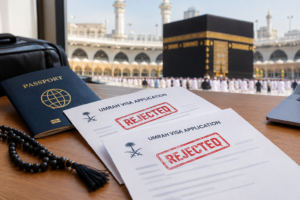

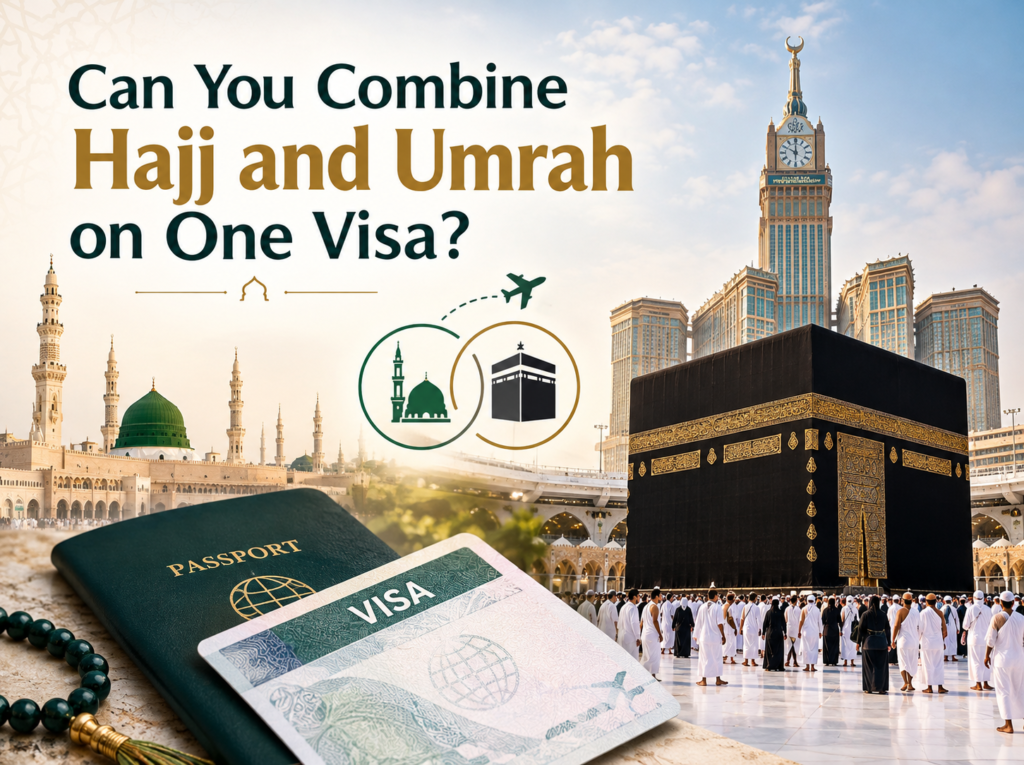
Many pilgrims planning their trip to Saudi Arabia ask the same question: can you combine Hajj and Umrah on one visa? The answer is yes, but it depends on which visa you hold and when you travel. This blog explains the difference between a Hajj visa and an Umrah visa, how pilgrims traditionally combine both rituals in one trip, and what UK Muslims need to know before booking.
Hajj Visa vs Umrah Visa, What Is the Difference?
A Hajj visa and an Umrah visa are two separate things, issued for two separate purposes. Mixing them up is one of the most common and costly mistakes pilgrims make.
The Hajj visa is only issued during the Hajj season. It is arranged through official government quotas for each country, so most pilgrims book it through a licensed Hajj operator rather than applying alone. Once you land in Saudi Arabia on a Hajj visa, your movement is generally limited to Makkah, Madinah, Jeddah, Mina, Arafat, and Muzdalifah.
The Umrah visa, on the other hand, is available all year round, except during the Hajj season itself. You can apply for it through a licensed UK travel agent or, if you are from an eligible country, through the Saudi tourist e-visa. Both routes require an extra step: booking your Umrah slot through the official Nusuk app, which controls entry times at the Grand Mosque.
Can You Combine Hajj and Umrah on One Visa?
Yes, in a practical sense, you can, but only under a Hajj visa, not an Umrah visa. Most pilgrims travelling for Hajj naturally perform Umrah as well, since it forms part of the pilgrimage itself. Scholars describe three accepted ways to do this:
Tamattu (Umrah, Then a Break, Then Hajj)
With Tamattu, you perform Umrah first after arriving in Makkah. You then come out of the state of Ihram and live normally until the Hajj days begin, when you enter Ihram again for Hajj. This is the most common choice among first-time pilgrims.
Qiran (Umrah and Hajj Together, No Break)
With Qiran, you enter Ihram with the intention of performing both Umrah and Hajj at once. You stay in Ihram the whole time, without removing it between the two rituals, until Hajj is complete.
Ifrad (Hajj Only)
With Ifrad, you perform Hajj only, without Umrah in the same trip. This is chosen less often by pilgrims travelling from abroad.
In all three, both rituals happen under the one Hajj visa. What you cannot do is the reverse: use an ordinary Umrah visa or tourist e-visa to perform Hajj. Saudi authorities check this closely, and holding the wrong visa type during Hajj season can mean being turned away at the airport or refused entry to Makkah.
Can You Use an Umrah Visa to Perform Hajj?
No. This is a common misunderstanding. An Umrah visa, and the Saudi tourist e-visa, both stop working for pilgrimage purposes once the Hajj season begins. The Ministry of Hajj and Umrah suspends Umrah permits from roughly the start of Dhu al-Qadah until the 13th of Dhu al-Hijjah every year, specifically to stop overcrowding and keep Hajj logistics safe. If you want to perform Hajj, you need a dedicated Hajj visa, arranged through your country’s official Hajj quota, not a general Umrah booking.
What About the New Multiple-Entry Umrah Visa?
In 2026, Saudi Arabia introduced a one-year, multiple-entry Umrah visa. It allows pilgrims to visit Saudi Arabia several times within 365 days, for a combined stay of up to 90 days. Each visit still needs its own approved package booked through Nusuk and its own Umrah permit. This is a useful option for pilgrims who want to perform Umrah more than once a year, but it does not cover Hajj. The visa is switched off during the Hajj season, the same as any other Umrah visa.
Why an Experienced Travel Agency Matters Here
Because Hajj and Umrah visas work so differently, booking through an agency that knows the rules well makes a real difference. This is where Al Momin Travel stands out as a trustworthy and reliable choice for UK Muslims.
Al Momin Travel is ATOL Protected under Licence 74904, issued by the UK Civil Aviation Authority, which means your flights and money are financially protected under UK law. The agency is also approved by the Saudi Ministry of Hajj and Umrah, so visa applications are processed correctly through the official Nusuk platform, with the right visa type for the right trip. Having served more than 1,500 UK pilgrims since 2018, Al Momin Travel’s team understands exactly when a Hajj visa is needed and when a standard Umrah booking is enough, which removes the guesswork for first-time pilgrims. Browse their all-inclusive Umrah packages or check their Ramadan Umrah packages for a trip that fits your travel dates.
Frequently Asked Questions
Can I perform Umrah first and then Hajj on the same trip?
Yes. This is called Tamattu, and it is the most common way pilgrims combine both rituals. You perform Umrah after arriving, then enter Ihram again for Hajj when the Hajj days begin, all under one Hajj visa.
Is a Hajj visa more expensive than an Umrah visa?
Generally, yes. Hajj packages include extra costs such as Mina, Arafat, and Muzdalifah accommodation, larger group logistics, and quota-based booking fees, which push the total cost above a standard Umrah trip.
Can I switch from an Umrah visa to a Hajj visa once I am already in Saudi Arabia?
No. You must apply for the correct visa type before you travel. Umrah visas and tourist e-visas cannot be converted into Hajj visas after arrival, and Umrah permits stop working entirely during the Hajj season.
Final Thoughts
So, can you combine Hajj and Umrah on one visa? Yes, through Tamattu or Qiran, using a single Hajj visa, which is exactly how most pilgrims experience their trip. What you cannot do is stretch an Umrah visa to cover Hajj, since the two are governed by separate rules and separate seasons. Getting this right from the start avoids wasted money and stress, which is why working with a properly licensed, ATOL-protected agency like Al Momin Travel, one that is also approved by the Saudi Ministry of Hajj and Umrah, gives UK pilgrims a dependable way to plan the right trip, with the right visa, from day one.